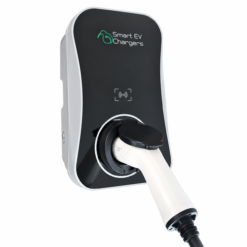
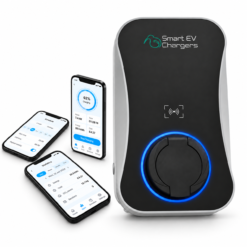
Farizon SuperVan Home Charger (NZ): Best Wall Chargers, Cables & Charging TimesFarizon van home charging

Looking for the right Farizon SuperVan home wall charger in New Zealand? This guide covers everything: which EV wall charger to install at home or depot, how fast the SuperVan charges on single phase and three phase, and what cable you need for public AC chargers.

The Farizon SuperVan (SV) is New Zealand’s 2025 Van of the Year — a purpose-built electric panel van available in four body configurations. All variants share a 170kW / 336Nm front-wheel-drive motor and an 11kW onboard AC charger, making it the only electric van in its class that can charge with 3 phase. DC fast charging peaks at 140kW (20–80% in approximately 36 minutes on a compatible rapid charger). Batteries are 67kWh LFP (L1H1 base) or 83kWh LFP (all other configurations), with WLTP range up to 376km.

Official Farizon SuperVan NZ Page

SV Specification L1H1 Base (67kWh) L1H1 / L2H2 / L3H3 (83kWh)
Battery (capacity / chemistry) 67kWh (LFP) 83kWh (LFP)
Range (WLTP combined) 303km Up to 376km
Motor / Drive 170kW / 336Nm — FWD
Max AC charging (home) 11kW (3-phase) / ~7.4kW (single phase 32A)
Max DC fast charging 140kW
DC fast charge session 20–80% in ~30 min 20–80% in ~36 min
Charging port Type 2 / CCS2 (combined AC & DC)
V2L (Vehicle-to-Load) 3.3kW 240V outlet
(Convenience Package option)

Best Home & Workplace Wall Chargers for the Farizon SuperVan

The SuperVan’s 11kW onboard charger means three-phase power unlocks faster overnight charging — a genuine advantage over single-phase-only EVs

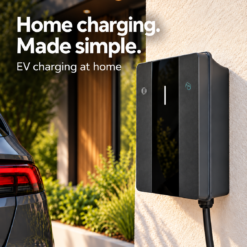
The Farizon SuperVan accepts up to 11kW on AC — which means it can take full advantage of a three-phase connection if your home, garage or depot has one. On a standard single-phase connection a 7kW / 32A wall charger is still a solid choice for overnight charging.

Three-phase connection? Use the 11kW advantage:
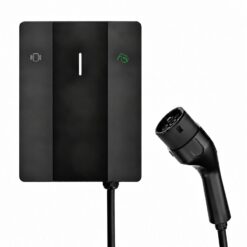
A 22kW 3-phase wall charger (socket-style) will deliver the full 11kW to the SuperVan (the vehicle’s onboard charger limits the draw to 11kW). This cuts charge time by roughly a third versus a single-phase 7kW charger, and future-proofs you for any EV with a higher onboard AC limit.

Single-phase connection at home?
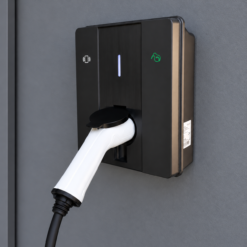
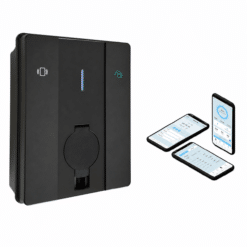
A 7kW / 32A wall charger is the right choice — tethered (fixed cable) for grab-and-go convenience, or untethered (socket-only) if you share the charger between vehicles or want to use the same Type 2 cable on public AC chargers.

Out of stock
Price range: $689.00 through $850.00 inc. GST

Farizon SuperVan charge times (home) — quick guide

Estimates below assume charging from 10% to 100% with typical wall-to-battery efficiency. Times shown are for the 83kWh battery (most configurations). The 67kWh L1H1 base model will charge approximately 20% faster at equivalent power levels.

Home charging setup Connection Approx. power Est. time (10% → 100%, 83kWh)
Included/portable charger (8A) Single phase ~1.8kW ~45 hours
Portable charger (10A) Single phase ~2.3kW ~36 hours
16A charger (caravan/commando) Single phase ~3.7kW ~23 hours
7kW wall charger (32A) Single phase ~7.4kW ~11 hours
22kW 3-phase wall charger 3-phase 11kW (vehicle AC limit) ~7.5 hours ✓ Fastest home option

The 22kW charger is capped to 11kW by the SuperVan’s onboard charger. The charger’s extra capacity future-proofs your installation for EVs with higher onboard AC limits. Three-phase supply at your property is required.

Want exact numbers for your power price and start %? Use the calculator below.

Farizon Van plugged in

Farizon SuperVan Charging Cost & Time Calculator

Select your battery size, power price and start % to estimate home charging time & cost.
Single phase
Three phase

Estimated time to charge

To 100% from your start %

Estimated cost to charge

$0.00
0.00 kWh from the wall (approx)

Public charging with the Farizon SuperVan (NZ)

In New Zealand you’ll mainly use two public charging types:
DC fast chargers for road trips and minimising fleet downtime, and Type 2 AC chargers found at supermarkets, malls and public car parks.

DC fast charging
The SuperVan supports up to 140kW DC. On a compatible rapid charger the 83kWh variant charges from 20–80% in approximately 36 minutes, and the 67kWh L1H1 base in approximately 30 minutes (conditions apply).
For long-haul work runs, stopping at around 20–80% gives the best balance of speed and on-road efficiency.

Type 2 AC chargers
Many NZ AC public chargers are “bring-your-own-cable”. PlugShare is great for checking what’s available before you leave base.

Provider Notes Apple App Android App
ChargeNet Largest network nationwide Download Download
BP Fast chargers at key sites Download Download
Z Energy Fast chargers at selected stations Download Download
Tesla Most NZ Superchargers are open to non-Tesla Download Download

What cable do I need for public AC charging?

The Farizon SuperVan uses a CCS2 combo port, with the Type 2 portion used for AC charging. Most NZ public AC chargers require you to bring your own cable.

  • For 3-phase AC public chargers (up to 22kW): a 22kW Type 2 to Type 2 cable — the SuperVan will draw 11kW from any 3-phase AC post. These cables are backwards compitable with 7kW charges. 
Charging port location
Front left

Farizon SuperVan Vehicle-to-Load (V2L) — Power on the job

The Farizon SuperVan supports Vehicle-to-Load (V2L) as part of the optional Convenience Package. It provides a 3.3kW 240V outlet directly in the rear cargo compartment — handy for running tools, powering equipment on-site, or keeping devices charged without a generator.
With a 67–83kWh LFP battery on board, the SuperVan has plenty of capacity to share on a long workday. Alternativley use our external V2L adapter. 

V2L Vehicle to Load

V2L Adapter for Farizon

$165.00 inc. GST

Farizon SuperVan home charging FAQs (NZ)

What is the best home wall charger for the Farizon SuperVan?

It depends on whether your home or workplace has three-phase power. If you have three-phase supply, a 22kW 3-phase wall charger is the best option — it delivers the full 11kW the SuperVan can accept, charging the 83kWh battery from 10% to 100% in approximately 7.5 hours. On a single-phase connection, a quality 7kW (32A) wall charger is the right pick, taking around 11 hours overnight.

Yes — the SuperVan has a maximum AC charging capacity of 11kW, which is delivered by a 3-phase 16A supply (3 × 230V × 16A ≈ 11kW). A 22kW 3-phase charger will also deliver 11kW to the van, as the vehicle’s onboard charger caps the draw at 11kW. This is still the fastest AC charging option available for the SuperVan, and the 22kW charger future-proofs your installation for higher-rated EVs.

Using the 83kWh battery as a reference (10% to 100%):
22kW 3-phase charger (11kW to van): approximately 7.5 hours
7kW single-phase wall charger: approximately 11 hours
16A caravan/commando charger: approximately 23 hours
The 67kWh L1H1 base charges approximately 20% faster at any given power level.

You can, but it will be very slow. At 8A the SuperVan’s large 83kWh battery takes around 45 hours from 10% to full. A standard power point is fine as a backup or for occasional top-ups, but a dedicated wall charger is strongly recommended for any fleet or regular overnight charging use.

No — you can charge on single phase using a standard 7kW wall charger, which gives around 11 hours overnight for the 83kWh variant. However, if your property already has three-phase supply (common in many industrial and rural NZ properties, and some newer homes), investing in a 22kW 3-phase charger is worthwhile to get the SuperVan’s full 11kW AC charging rate and halve your charge time versus a portable cable.

The SuperVan uses a Type 2 AC inlet (part of the CCS2 combo port). For public AC chargers you need a Type 2 to Type 2 cable. We recommend the 22kW-rated version — it works on both single-phase and three-phase AC public chargers, and allows the SuperVan to draw the full 11kW wherever 3-phase AC is available. A 5m length is ideal for most public bays.

On a compatible DC rapid charger (up to 140kW), the 83kWh SuperVan charges from 20–80% in approximately 36 minutes. The 67kWh L1H1 base variant is faster, at approximately 30 minutes for the same window. For long-haul work runs, targeting 20–80% sessions maximises charging speed and protects the LFP battery long-term.

Yes, with the optional Convenience Package. V2L provides a 3.3kW 240V outlet built into the rear cargo compartment — useful for running power tools, small appliances, or charging equipment on-site without a generator. It is not included as standard.

Expert Farizon SuperVan charging advice

Want the fastest and most cost-effective charging setup for your SuperVan or fleet? We’ll help you choose the right wall charger, cable, and installation approach for your home, depot or worksite — including solar-ready and three-phase options.

Free advice includes:
– Single-phase vs three-phase charger recommendation
– Fleet multi-charger and load balancing options
– Installation quote (nationwide)
– Solar-aware charger options (use excess solar generation)
– Public charging cable advice for the 11kW CCS2 port

0224564874
Sales@smartevchargers.co.nz