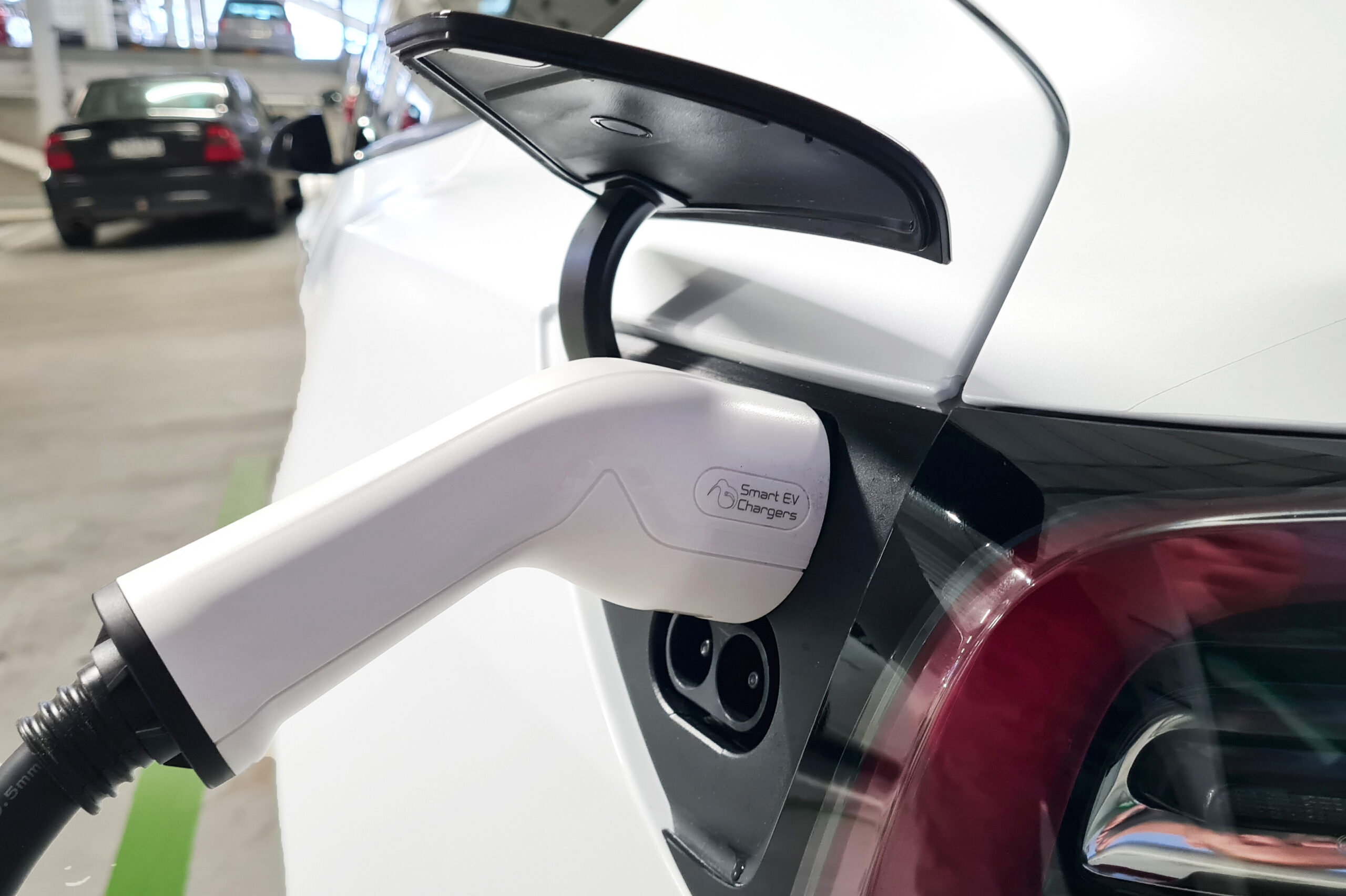
Fleet charging banner

EV Fleet Charging Solutions NZ

Depot, workplace and employee-home charging for company vehicles.

We supply the fleet EV chargers, load management and the Kiwi EV management software — your electrician handles the install. RFID access, per-vehicle energy reports and home charging reporting for employee reimbursement, all in one platform.
Size my fleet system Get fleet pricing

Fleet EV charging at a glance

Load-managed charging

Dynamic load management shares the available site capacity across all connected chargers — often reducing or delaying the need for a costly supply upgrade.

Every kWh tracked per vehicle

RFID cards identify the driver or vehicle at every session — energy, cost-centre and sustainability reporting comes out of Kiwi EV OCPP platform.

Home charging, reported

Company vehicle garaged at a staff member’s house? The charger records every session, giving you the energy data remotly to reimburse fairly each pay cycle.

Hardware + software, your sparky

You buy the chargers and Kiwi EV access from us; your registered electrician installs them, with commissioning and technical support available from us.

Fleet EV chargers we supply

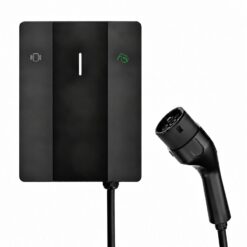
Smart chargers with load management. Volume pricing available on multi-charger orders — tell us your fleet setup and we’ll confirm the right hardware configuration for RFID access and Kiwi EV management.

Overnight EV depot charging

Most fleets don’t need fast charging — they need reliable overnight depot charging. A van doing 150km a day uses roughly 30kWh. On a 7.4kW charger that’s recovered in about 4 hours, and the vehicle is typically parked for 10–12. Charging overnight also puts the load onto cheaper off-peak power.

For fleets where every vehicle has a dedicated overnight bay, one charger per assigned vehicle is usually the simplest operational setup — no cable-shuffling at night. Shared chargers can work where vehicles can be moved or run staggered schedules.

  • Charging scheduled into off-peak rates via Kiwi EV
  • Every session logged against the vehicle or driver
  • Fault and offline alerts can notify the fleet manager before the morning run

Charge 10 or 20 vehicles within a controlled site power limit

Twenty 7.4kW chargers running flat out would draw 148kW — far more than most commercial sites have spare. That’s why fleet installations fail on paper, and why load management is central to how they succeed in practice.

The chargers share a controlled power allowance across all connected vehicles, so the installation stays within the site limit set by your electrician. Where site monitoring is installed, that allowance can increase or decrease according to the building’s real-time demand — freeing up more charging power when the rest of the site is quiet.

Where the available overnight energy is sufficient, the system distributes power across the fleet so vehicles receive the energy they need before departure. Load management often reduces or delays the need for a costly supply upgrade, and lets you add chargers later as the fleet grows without re-doing the electrical design.

Fleet charging calculator

Enter your fleet details for an indicative charger configuration — how many chargers, what output, and whether the overnight energy requirement fits within your entered site capacity.

Vehicles parked and charging at the site overnight

Average daily distance

Typical depot dwell is 10–14 hours

Car ~15–18 · Van ~22–28 · Light truck ~35+

Check the vehicle spec, Most EVs accept 7.4 or 11kW AC

Allowance for late arrivals, early departures and demand variation

Spare site capacity. Guide: 63A single-phase ≈ 14kW · 100A three-phase ≈ 69kW. Your electrician can confirm.

Indicative charger configuration

Daily energy per vehicle (incl. charging losses)
Total fleet energy per night
Indicative charger configuration
Design overnight power (incl. planning margin)
Within entered site capacity?

Send us these numbers and we will spec the hardware and Kiwi EV setup, free of charge.

Results are indicative only. Final charger quantity, output, diversity, load management and electrical capacity must be confirmed from actual vehicle data, duty cycles and a site assessment by the project electrician.

7kW vs 22kW vs DC fleet charging — which do you need?

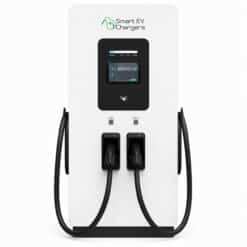
  7.4kW single-phase AC 11–22kW three-phase AC DC fast charging
Range added per hour ~35–45km ~55–120km, depending on the vehicle’s onboard AC limit Highly vehicle-dependent; approximately 50kWh delivered per hour at full output (50kW)
Best for Overnight depot charging, employee homes Shorter dwell times, higher daily kms, shared bays Back-to-base top-ups, shift changeovers, trucks
Supply needed Single-phase 32A per charger (load managed) Three-phase 16–32A per charger (load managed) Three-phase, dedicated high-capacity feed
Hardware cost per bay Lowest Moderate Highest by far
Typical fleet fit Suitable for many fleets where vehicles are parked overnight Fleets doing higher daily kilometres or shorter dwells Fleets that can’t stop for long

Three-phase output above 11kW requires the vehicle’s onboard charger to support it — many EVs cap at 7.4kW or 11kW AC. We’ll check your vehicle models before quoting.

The honest answer: many NZ fleets with a full overnight dwell are well served by 7.4kW chargers with load management. It’s the lowest cost per bay, works on single-phase circuits, and an overnight dwell recovers a typical day’s driving. Spend the savings on more charging bays, not faster ones.

Example fleet charging systems — 5, 10 and 20 vehicles

Indicative starting points — the exact mix depends on duty cycle, dwell time and each vehicle’s AC charging capability. The calculator above (or a quick email) gets you a specific spec.

Fleet size Indicative system Site supply Management
5 vehicles
e.g. trade fleet, ~100km/day each
5 × 7.4kW smart chargers (socket) with load management ~15–20kW shared under a controlled limit — often fits an existing board with headroom Kiwi EV — RFID access, per-vehicle reports
10 vehicles
e.g. service fleet, mixed daily kms
10 × 7.4kW smart chargers, load-managed to the site limit ~30–40kW shared under a controlled limit Kiwi EV — cost-centre reporting, fault alerts, off-peak scheduling
20 vehicles
e.g. depot fleet, staggered returns
16–20 × 7.4kW AC chargers, with one or two higher-output AC bays (e.g. 22kW three-phase) or DC where selected vehicles need faster turnaround Shared under a controlled site limit set from a site assessment — load management holds the installation under that limit Kiwi EV — full depot dashboard, RFID per driver, sustainability reporting

Add tethered-cable chargers at employee homes for vehicles that garage off-site — they report into the same Kiwi EV account for reimbursement reporting.

Fleet charger management with Kiwi EV

Every charger — depot, workplace or an employee’s garage — connects to Kiwi EV, our cloud OCPP platform. One dashboard for the whole fleet, one small monthly subscription per charger.

RFID driver & vehicle ID

Swipe cards or the app authorise each session. Assign cards to drivers or keep one with each vehicle, so every kWh is tagged in the reports.

Energy consumption by vehicle

Session-by-session kWh per vehicle or driver, exportable for your fleet manager or accounts team.

Cost-centre & sustainability reporting

Set your power rate, allocate charging to cost centres, and export energy-use data that can support sustainability and emissions reporting.

OCPP remote monitoring

See each connected charger’s status — in use, available, offline — and start, stop or configure sessions remotely..

Charger fault notifications

Fault and offline alerts can notify the fleet manager when supported events are reported by the charger — often before the driver notices.

Paid or free charging

Free for fleet vehicles, paid for staff private cars or visitors — cost recovery runs through the same platform.

Company vehicle charging at employees’ homes

When staff take company vehicles home, the depot problem becomes a payroll problem: how do you reimburse employees fairly for the electricity they’ve paid for?

Install one of our smart chargers at the employee’s home and connect it to your Kiwi EV account. Every charging session is logged — kWh used, when, and against which card. The company vehicle’s charging consumption is recorded separately from general household electricity use, so you set the reimbursement rate once and run a report each pay cycle. Automated energy reporting to support reimbursement — no spreadsheets, no honesty-box estimates.

  • Charger reports every session to your fleet dashboard
  • Set the cents-per-kWh rate for reimbursement reporting
  • Assigning an RFID card to the company vehicle helps ensure only authorised sessions are included in reimbursement reports
  • Off-peak scheduling keeps the reimbursed rate low
  • If the employee leaves, re-assign the charger or move it

If you operate a small fleet check out our guide on how to claim back the power cost of runing an EV guide

Type 2 Ev charging Tesla

Planning a fleet transition?

Send us your vehicle list and daily distances — we’ll come back with an indicative charger configuration and pricing.

Get a fleet recommendation View fleet chargers

Everything except the invoice for the electrician

We deliberately don’t sell installation — you get the hardware and software from the direct importer, and your own electrician does the physical install. It keeps pricing sharp and your options open.

T9 use home charging

Fleet EV charger supply

Chargers, cables and load management — all imported by us with direct manufacturer relationships, competitive fleet pricing and volume pricing on multi-charger orders.

Kiwi EV OCPP software

Cloud-based fleet charger management — app and web dashboard, RFID access, energy and cost reporting, home charging reporting for reimbursement. Small monthly subscription per charger.

Electrician installing an Autel charger

Installation your way

Installation can be completed by your registered electrician — or we can put you in touch with one in your area for a quote — with commissioning and technical support available from us.

Fleet EV charging — common questions

For fleets where every vehicle has a dedicated overnight bay, one charger per assigned vehicle is usually the simplest operational setup. Shared chargers may work where vehicles can be moved or have staggered schedules. Use the calculator above with your vehicle count, daily kilometres and dwell time for an indicative configuration — or email us the pattern and we’ll spec it.

Often, yes — but it depends on the numbers. Twenty vehicles doing 120km a day need roughly 530kWh a night, which averages around 45kW over a 12-hour dwell. Load management shares your site’s available capacity across all chargers so the installation stays within a controlled limit, which often reduces or defers the need for an upgrade. A supply upgrade becomes necessary when the total overnight energy genuinely exceeds what the connection can deliver over the full dwell time — a site assessment confirms which side of that line you’re on.

7.4kW is suitable for many light-vehicle fleets with a full overnight dwell — it typically recovers a full day’s driving. 11kW or 22kW three-phase suits higher daily kilometres or shorter dwell times, but check each vehicle’s onboard AC limit first — many EVs cap at 7.4kW or 11kW. DC fast charging is for fleets that can’t stop for long, and costs several times more per bay.

We supply a smart charger for the employee’s home, connected to your Kiwi EV account. Every session is logged with the kWh used, recorded separately from general household electricity use. You set a reimbursement rate per kWh, then run a report each pay cycle to process reimbursement through payroll — automated energy reporting replaces manual claims and estimates.

OCPP (Open Charge Point Protocol) is the open standard that lets chargers talk to management software. Choosing OCPP-compliant hardware reduces dependence on one software provider and makes future platform migration more practical, subject to charger and backend compatibility.

Each session is authorised with an RFID card or the app. Assign cards to drivers or keep one with each vehicle — either way, every kWh in Kiwi EV is tagged to a card, and reports can be grouped by cost centre for internal billing.

No — and that’s deliberate. We supply the hardware and the Kiwi EV software at direct-import prices. Installation can be completed by your registered electrician — or one we can recommend in your area — with commissioning and technical support available from us before and during the install.

Kiwi EV can send fault and offline alerts to the fleet manager when supported events are reported by the charger. Some issues can be investigated or reset remotely, depending on the charger and fault type, and hardware is backed by our NZ-based warranty support as the direct importer.

Yes — that’s one of the main reasons to use load management from day one. New chargers join the same managed group and the controlled power allowance is re-shared automatically, so you can electrify the fleet in stages without re-designing the electrical installation each time.

Kiwi EV is a small monthly subscription per connected charger — no setup fees and no long-term contract. Email us your fleet size and we’ll quote the hardware and software together.

Get a fleet charging recommendation

Tell us your vehicle count, daily kilometres and site details — or paste in the calculator results. We’ll reply with an indicative hardware spec, Kiwi EV setup and pricing. No installation upsell, no obligation.

Prefer to talk? Call 022 456 4874 or email Sales@smartevchargers.co.nz