Farizon V7E Home & Depot Charger (NZ): Best Wall Chargers, Cables & Charging Times

v7e home charger
Running a Farizon V7E in your fleet or a a courier? This guide covers everything: which EV wall charger to install at your depot or home, how fast the V7E charges on single-phase vs three-phase, and what cable you need for public AC chargers.

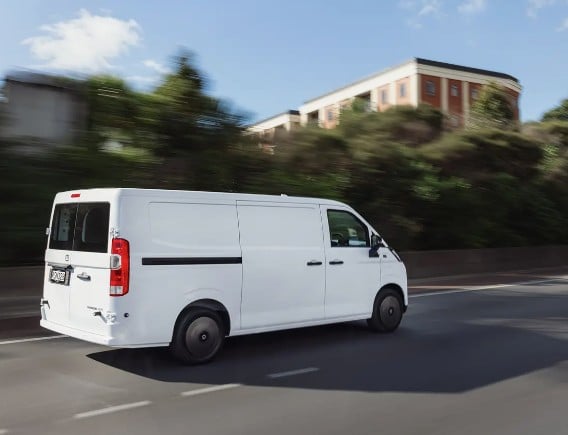
The Farizon V7E is a 100% electric cargo van with a 66.67kWh battery delivering up to 329km of WLTP range, 7m³ of cargo space and a 1,243kg payload. Home and depot charging is via an 11kW three-phase onboard charger, and the V7E also supports 120kW DC fast charging (20–80% in around 30 minutes). It comes with Vehicle-to-Load (V2L) as standard, so you can run tools and equipment straight off the battery, on-site.

Official Farizon V7E NZ Page

Farizon V7E Specification Value
Battery (capacity) 66.67kWh
Electric range 329km (WLTP)
Cargo volume 7m³
Max gross payload 1,243kg
Motor / Drive 100kW / 230Nm — front-wheel drive
Vehicle-to-Load (V2L) Standard
Max AC charging (home/depot) 11kW (three-phase)
Max DC fast charging 120kW
Typical DC session 20–80% in ~30 minutes (conditions apply)
Typical full AC charge (11kW) ~6 hours (10–100%)

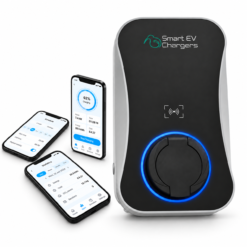
Best Wall Chargers for the Farizon V7E

Keep your fleet on the road — fast, reliable charging at the depot or home base

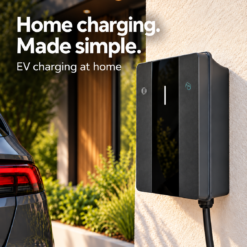
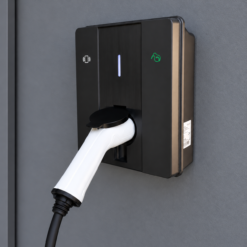
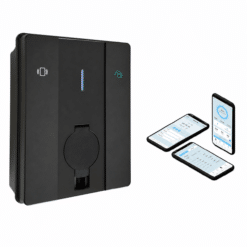
The V7E charges at up to 11kW on AC via its three-phase onboard charger — a real advantage for fleet operators, provided your depot or home has a three-phase supply. A 22kW / 32A three-phase wall charger is the ideal setup — the van will draw its full 11kW limit, and the wallbox is future-proofed for the rest of your fleet. A full charge takes around 6 hours from 10% to 100% — easily done overnight or during a depot changeover.

If running this from home, most homes only have single phase so a 7Kw charger is ideal in this situation and will still fully charge the battery overnight.

Choose your depot/home charging style:

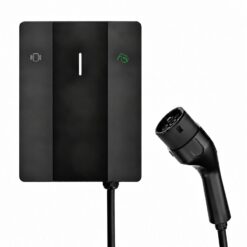
Three-phase 22kW wall charger: delivers the V7E’s full 11kW rate — the right choice if you have three-phase power and want minimum downtime
Single-phase 7kW wall charger: still a solid choice if three-phase isn’t available — slower, but reliable for overnight charging
Solar-aware charger: if your depot has solar, a smart charger that diverts excess solar can offset daytime charging costs

Farizon V7E charge times (home/depot) — quick guide

Estimates below assume charging from 10% to 100% with typical wall-to-battery efficiency. The V7E’s onboard charger caps AC charging at 11kW (three-phase).

Home/depot charging setup Approx. power Est. time (10% → 100%)
Included (8A) / standard socket ~1.8kW ~33 hours
Portable charger (10A) ~2.3kW ~26 hours
16A charger (caravan/commando style) ~3.7kW ~16 hours
7kW wall charger (32A single-phase) 6.6kW ~9 hours
22kW wall charger (32A three-phase, full 11kW to van) 11kW ~6 hours

Want exact numbers for your power price and start %? Use the calculator

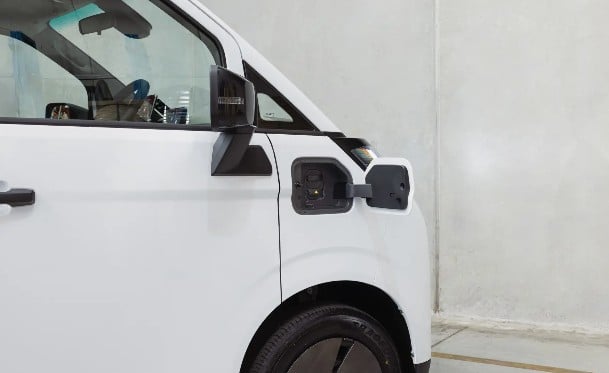
farizon v7e charging port open

Farizon V7E Charging Cost & Time Calculator

Set your battery size, power price and start % to estimate home/depot charging time & cost.

Estimated time to charge

To 100% from your start %

Estimated cost to charge

$0.00
0.00 kWh from the wall (approx)

Public charging with the Farizon V7E (NZ)

As a full EV, the V7E supports both Type 2 AC and CCS2 DC fast charging, so you have the full range of public charging options available between jobs or on longer runs.

DC fast charging
The V7E can DC fast charge at up to 120kW, with a quoted 20–80% session in approximately 30 minutes on a compatible rapid charger (conditions apply). That’s genuinely useful between deliveries — top up during a stop and keep the van earning.

Type 2 AC chargers
AC public chargers are slower, making them ideal when the van is parked for a while — at a depot, distribution centre, or job site. Some have a Type 2 cable already attached, while others are “bring-your-own-cable” and need your own Type 2 to Type 2 cable. Because the V7E charges at up to 11kW on AC, a 22kW-rated cable lets it draw its full rate from any three-phase Type 2 post. PlugShare is handy for checking what’s available before you head out.

Popular Apps for Fast charging

Provider Notes Apple App Android App
ChargeNet Largest network nationwide Download Download
BP Fast chargers at key sites Download Download
Z Energy Fast chargers at selected stations Download Download
Tesla Most NZ Superchargers are open to non-Tesla Download Download

What cable do I need for public AC charging?

We recommend our Type 2 to Type 2 cable (22kW-rated, three-phase) — it lets the V7E draw its full 11kW rate from any three-phase AC post, and is fully backwards compatible with single-phase 7kW chargers too.
A 5m length suits most depot, distribution centre and public AC bays.

Vehicle to Load

The V7E comes with Vehicle-to-Load as standard. Allowing you to run tools, equipment or devices directly from the van’s battery on-site — handy for trades, deliveries, or as backup power during an outage. With a 66.67kWh battery on board, there’s plenty of capacity to spare on a long workday.

V2L Vehicle to Load

V2L Adapter for Farizon

$165.00 inc. GST

Farizon V7E home & depot charging FAQs (NZ)

What is the best wall charger for the Farizon V7E?

A 22kW (32A) three-phase wall charger is the best match for the V7E. The van’s onboard AC charger caps at 11kW three-phase, so a 22kW wallbox delivers the V7E’s full charging speed — a full charge in around 6 hours. A 22kW unit also future-proofs your depot for the rest of your fleet.

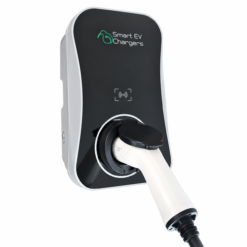
Most homes have single phase so the Single phase Smart EV wall charger is ideal for home use. 

Yes — the V7E’s onboard charger accepts up to 11kW on AC, which requires a three-phase supply to reach. On a standard single-phase connection, a 7kW / 32A wall charger will still charge the van reliably overnight, just at a lower rate (around 9 hours for a full charge instead of 6).

The V7E has a 66.67kWh battery delivering up to 329km of WLTP range. Real-world range will vary with load, driving style and conditions, but it comfortably covers most urban delivery and trade routes on a single charge.

Yes — however a full 10–100% charge takes around 33 hours, so a standard socket is best as an occasional backup rather than your main charging method. A 22kW three-phase wall charger (or 7kW single-phase if three-phase isn’t available) is strongly recommended for fleet use.

A Type 2 to Type 2 cable rated to 22kW is the right choice for the V7E — it lets the van draw its full 11kW from three-phase AC posts, while still working fine on single-phase 7kW chargers. We suggest a 5m length for depot and public AC bays.

Yes. On a compatible DC rapid charger (120kW or higher), the V7E charges from 20–80% in approximately 30 minutes under typical conditions (conditions apply). That makes it easy to top up between deliveries or on longer regional runs.

Yes — V2L comes standard on the V7E, so you can run tools, equipment or devices directly from the van’s battery. Handy for trades, job sites, deliveries or emergency backup power.

Yes — for multi-vehicle depots, look at a charger with dynamic load balancing so your total draw stays within your supply limit, and consider how many three-phase circuits your site has available. Talk to us about depot layouts and sequencing if you’re running more than one or two vans.

Expert Farizon V7E charging advice

Want the easiest, most reliable charging setup for your fleet? We’ll help you choose the right wall charger, cable length,
and installation approach for your depot or home base — including three-phase and load-balancing options.

Free advice includes:
– Charger recommendation (best value 22kW three-phase unit for the V7E)
– Installation quote (nationwide options)
– Depot load-balancing for multi-vehicle fleets
– Public charging cable advice
– Smart load management for shared-supply sites

0224564874
Sales@smartevchargers.co.nz