Haval H6 PHEV & H6GT PHEV Home Chargers, Cable & Charging Guide NZ

Both GWM Haval plug-in hybrids charge through a Type 2 inlet and accept a maximum of 6.6kW AC. The H6 PHEV has a 19.09kWh battery and fills in about 2.9 hours; the H6GT PHEV carries a much larger 35.4kWh pack, taking around 5.4 hours. A 7.4kW single-phase smart wall charger is the right match for both — the 8A charger supplied with the car takes 10 to 19 hours.

Shop Haval H6 home chargers Shop portable chargers Shop charging cables Shop H6 V2L adapter
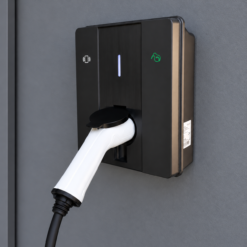
Haval H6 charging at home

Best wall charger

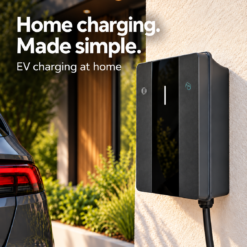
7.4kW / 32A single-phase

Car draws up to 6.6kW — no three-phase required

Home charge time

H6 PHEV ~2.9 hrs
H6GT PHEV ~5.4 hrs

10–100% at 6.6kW

Public AC cable

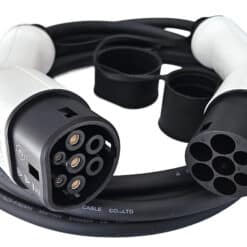
Type 2 to Type 2, 5m

For public AC and socket-only wall chargers

DC fast & V2L

34kW (H6) • 48kW (H6GT)

CCS2 • V2L up to 3.3kW — adapter here

Charging factHaval H6 PHEVHaval H6GT PHEV
AC connectionType 2
Maximum AC rate6.6kW single-phase
Battery19.09kWh LFP35.4kWh
Best option for most homes7.4kW single-phase wall charger
Public DC connectionCCS2 — up to 34kWCCS2 — up to 48kW
V2LYes — up to 3.3kW, adapter required

Recommended home chargers for the Haval H6 PHEV range

Best for both models

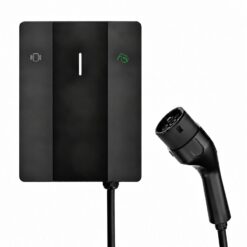
7.4kW smart wall chargers

A single-phase 7.4kW (32A) charger supplies more than the car can take, so both models charge at their full 6.6kW: about 2.9 hours for the H6 PHEV, or 5.4 hours for the H6GT’s larger pack. Both fit comfortably inside an overnight window.

Buy the tethered version if: you want the simplest everyday option — pull in, plug in, done.
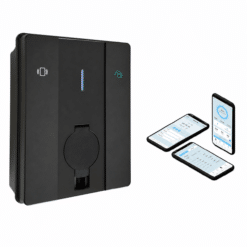
Buy the socket (untethered) version if: you want a tidier wall unit, already own a Type 2 cable, or share the charger between vehicles.

Load monitoring prevents overloading your mains while charging. Solar diversion varies charging power to match your solar generation — a strong match for a PHEV, since a modest array can cover most of an H6 PHEV charge. Scheduling via the free app makes the most of off-peak rates.

Don’t buy a three-phase charger for these cars. Both H6 plug-in hybrids are limited to 6.6kW AC, so a 22kW three-phase wall charger delivers exactly the same charge time as a 7.4kW single-phase unit at a higher price. The only reason to consider one is if you also charge a three-phase-capable EV at the same property.
Haval H6 PHEV plugged in dishcarging

About the Haval plug-in hybrids

Two models, one charging setup

The H6 PHEV is the mid-size SUV, offered in 2WD (106km electric range) and Hi4 AWD (100km) forms on a 19.09kWh LFP battery. The H6GT PHEV is the coupe-styled AWD flagship, with a 35.4kWh battery and a class-leading 180km of electric range — enough that many owners run it as an EV all week.

Both charge the same way: Type 2 at 6.6kW maximum AC, with CCS2 for DC. What changes is how long a full charge takes and how fast each accepts DC on the road.

GWM Haval NZ →
H6GT NZ owners Facebook group →

ItemHaval H6 PHEVHaval H6GT PHEV
BodyMid-size SUVCoupe-style SUV
Battery size19.09kWh LFP35.4kWh
Electric-only rangeUp to 106km (2WD) / 100km (Hi4 AWD)Up to 180km
Drive2WD or Hi4 AWDAWD
Combined outputUp to 268kW / 760Nm (AWD)321kW
AC charge portType 2
Maximum AC charge speed6.6kW single-phase
DC charge portCCS2
Maximum DC charge speedUp to 34kWUp to 48kW
DC fast charge 30–80%~28 min~26 min
Charge port locationRear, driver’s sideRear, driver’s side
V2LYes — up to 3.3kW, adapter required

Haval H6 PHEV home charging times

Charge times from 10% to 100%. The last few percent slow down as the cells balance, so these are estimates.

Charger typeCharging powerH6 PHEV (19.09kWh)H6GT PHEV (35.4kWh)
Factory 8A plug-in charger (standard NZ socket)1.8kW~10.4 hrs~19.2 hrs
10A portable Type 2 charger2.3kW~8.3 hrs~15.4 hrs
16A portable charger (caravan plug)3.7kW~5.2 hrs~9.6 hrs
32A single-phase wall charger6.6kW (vehicle limit)~2.9 hrs~5.4 hrs

Estimates allow for approximately 10% charging losses. Actual speed can vary with temperature, battery condition and the vehicle’s charging behaviour near 100%.

How much electric range will each charger add?

Kilometres of electric driving added per hour of charging. On a plug-in hybrid this is the number that matters most — every kilometre you add is a kilometre you don’t buy petrol for.

ChargerH6 PHEVH6GT PHEV
Factory 8A charger (standard socket)~9km per hour~8km per hour
10A portable charger~11km per hour~11km per hour
16A portable charger (caravan socket)~18km per hour~17km per hour
7.4kW wall charger (6.6kW to the car)~33km per hour~30km per hour

Want exact numbers for your power price and starting charge? Use the calculator below, or see our charge time calculator and charge cost calculator.

Haval H6 V2L discharging

Haval H6 PHEV charging cost & time calculator

Pick your model — it sets the battery size automatically. Both models accept a maximum of 6.6kW AC.

Estimated time to charge

To 100% from your start %

Estimated cost to charge

$0.00
0.00 kWh from the wall (approx)

Portable charger for the Haval H6 PHEV

Both models come with an 8A charger, which is slow — over 10 hours for the H6 PHEV and around 19 for the H6GT. A 10A portable Type 2 charger shortens that on a standard household socket, and a 16A model on a correctly installed blue caravan-style socket roughly halves it again.

Buy the 10A if: you want a faster replacement for the factory cable, or a travel charger for the bach and family visits.
Buy the 16A if: you have (or will install) a dedicated caravan-style socket and want the fastest portable option.

For daily charging — especially on the H6GT’s 35.4kWh battery — a 7.4kW wall charger is far more practical. Any portable charger for these cars must have a Type 2 vehicle connector.

Plug in EV chargers

10a Plugin EV Charger Type 2

$399.00 inc. GST
$415.00 inc. GST

What charging cable does the Haval H6 PHEV need?

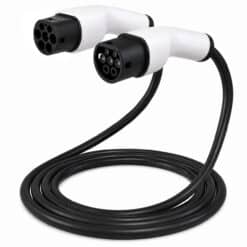
Vehicle-side plug: Type 2. You’ll need your own Type 2 to Type 2 cable for public AC chargers and for any untethered (socket-only) wall charger. We recommend 5m.

Because both cars cap at 6.6kW, a single-phase 7kW cable is sufficient. A 22kW three-phase cable also works and is worth considering only if you may later own a car that charges faster.

Most free public AC chargers use a Type 2 socket and need your own cable; some have one hard-wired. DC fast chargers always have their cables attached.

Price range: $175.00 through $355.00 inc. GST

Power anywhere

Haval H6 V2L adapter

The H6 plug-in hybrids support Vehicle-to-Load at up to 3.3kW, powering anything that uses a standard 10A or 15A New Zealand or Australian plug — a fridge, lights, kettle, projector or many portable tools. We developed this adapter specifically for the H6GT and ship it to New Zealand and Australia.

Because the petrol engine can recharge the battery, a plug-in hybrid makes a particularly practical power source on a worksite, at a campsite or in an outage. V2L powers appliances plugged into the adapter — it is not a connection to your home’s fixed wiring and cannot backfeed your switchboard.

Public charging with the Haval H6 PHEV

DC fast charging (CCS2): unusual on a plug-in hybrid and genuinely useful. The H6 PHEV accepts up to 34kW and the H6GT up to 48kW, taking 30–80% in around 28 and 26 minutes respectively. Charging slows sharply above 80%, so on a road trip a short stop to 80% beats waiting for a full battery. DC chargers have cables attached. The main NZ networks are ChargeNet, BP Pulse, Z and Tesla — all covered in our public charging guide.

Public AC charging (Type 2): at supermarkets, malls, hotels and motels you’ll usually need your own Type 2 cable. Check PlugShare for chargers in your area and what cables they need.

Haval H6 PHEV charging FAQs

What type of charger does the Haval H6 PHEV use?

A Type 2 inlet for AC charging and CCS2 for DC fast charging, on both the H6 PHEV and H6GT PHEV. Untethered and public AC chargers require a Type 2-to-Type 2 cable.

A 7.4kW (32A) single-phase smart wall charger. It supplies more than the car’s 6.6kW limit, so both models charge as fast as they can — about 2.9 hours for the H6 PHEV, or 5.4 hours for the H6GT.

No, and there is no benefit in buying one for these cars. The onboard charger is limited to 6.6kW, so a 22kW three-phase charger charges no faster than a 7.4kW single-phase unit. Three-phase is only worth it if you also charge a vehicle that can use it.

The H6 PHEV has a 19.09kWh battery, up to 106km of electric range and DC charging to 34kW. The H6GT PHEV has a 35.4kWh battery, up to 180km of electric range and DC charging to 48kW. Both charge on AC at the same 6.6kW, so the H6GT simply takes about twice as long at home.

It works, but it’s slow: around 10.4 hours for the H6 PHEV and 19.2 hours for the H6GT from 10–100%. It also draws continuous current from a standard household socket for a long stretch. A wall charger cuts that to a few hours and adds scheduling, load monitoring and solar features.

Yes. A 10A portable Type 2 charger fills an H6 PHEV from a standard household socket in around 8.3 hours — a single overnight charge. The H6GT’s larger battery takes about 15.4 hours, so a wall charger is the better option there.

A 7kW Type 2 to Type 2 cable in 5m. That carries everything these cars can take on AC; a 22kW three-phase cable is optional future-proofing for a later vehicle.

No — it drives as a hybrid on petrol alone. But the advertised fuel figures assume a charged battery, and with 106km (H6 PHEV) or 180km (H6GT) of electric range, most NZ daily driving can be done without petrol if you charge at home. That’s where a wall charger pays for itself.

The H6 PHEV uses an LFP battery, which is generally more tolerant of regular 100% charging than many nickel-based EV batteries. Follow the charging guidance in your vehicle manual for your specific model.

Up to 34kW on the H6 PHEV and up to 48kW on the H6GT, via CCS2 — roughly 30–80% in 28 and 26 minutes respectively. Charging slows considerably above 80%.

Yes — up to 3.3kW through a plug-in adapter that provides a standard NZ socket, enough for appliances such as a fridge, lights, kettle or portable tools. We make the compatible adapter and ship it to New Zealand and Australia.

It depends on the distance from your switchboard to the parking spot, how straightforward the cabling run is, and your existing switchboard capacity. We can arrange installation quotes through our installer network, available in many locations nationwide, or you can buy the charger only and use your own electrician. Request a quote here.

Related guides

Public charging guideCharge time calculatorCharge cost calculator

Free advice, no obligation

Charger only, or charger + installation

Buy the charger on its own and hand it to your own electrician, or ask us for a recommended electrician in your area.

Free advice includes:
– Charger recommendation for your H6 PHEV or H6GT PHEV
– Installation quote (available in many locations nationwide)
– Solar integration options (charge using excess solar generation)
– Public charging & cable guidance

0224564874
Sales@smartevchargers.co.nz